
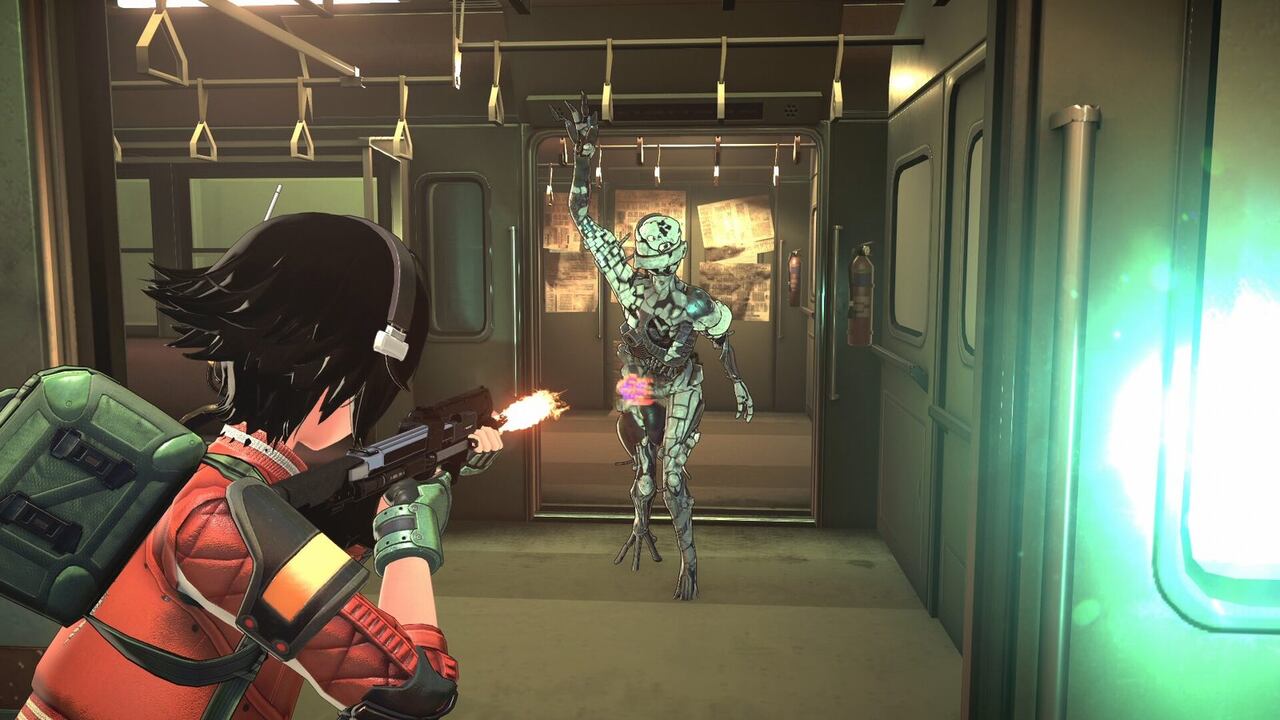
ANOMALITH has seventeen weapons across five classes — five handguns, three shotguns, three submachine guns, two assault rifles, four sniper rifles. Every gun shares the same upgrade structure: five evaluation gauges that must all be filled before the next tier unlocks. Three of the nine have no crafting recipe at all, because they ship with the Digital Deluxe Edition.
The seventeen guns, with base stats
Values below are the printed base numbers before any upgrade. Attack is per shot or per pellet depending on the class, so the sniper's figure is not comparable to the shotgun's in practice.
| Class | Weapon | Attack | Magazine | Fire rate | Reload |
|---|---|---|---|---|---|
| Handgun | Handgun | 44 | 12 | 200 | 110 |
| Handgun | Machine Pistol | 62 | 25 | 1000 | 110 |
| Handgun | Revolver | 87 | 6 | 150 | 80 |
| Handgun | Semi-Automatic Magnum | 128 | 12 | 320 | 120 |
| Handgun | Prototype Handgun | 56 | 25 | 300 | 120 |
| Shotgun | Shotgun | 110 | 6 | 100 | 110 |
| Shotgun | Semi-Automatic Shotgun | 261 | 6 | 180 | 100 |
| Shotgun | Double-Barreled Shotgun | 119 | 2 | 500 | 130 |
| SMG | Old-Model Submachine Gun | 20 | 30 | 1100 | 120 |
| SMG | Submachine Gun | 33 | 20 | 1000 | 100 |
| SMG | Prototype Submachine Gun | 51 | 45 | 1300 | 90 |
| Assault rifle | Old-Model Assault Rifle A | 173 | 25 | 600 | 90 |
| Assault rifle | Assault Rifle | 206 | 35 | 700 | 85 |
| Sniper | Sniper Rifle | 645 | 3 | 100 | 90 |
| Sniper | Prototype Sniper Rifle | 702 | 10 | 130 | 130 |
| Sniper | Anti-Materiel Rifle | 912 | 5 | 100 | 130 |
| Sniper | Semi-Automatic Sniper Rifle | 360 | 10 | 100 | 90 |
Ten are craftable across Development Levels 2 to 7, at 2,800 to 8,200 OV. Two are starters, two are found in the world (the Shotgun in the hospital, the Old-Model Assault Rifle A in the Yotsuba-dai housing), and three ship with the Digital Deluxe Edition.
 Official media · Steam
The numbers the first table hides
Attack and magazine size are the two figures everyone reads, and they are the two that mislead most. The rest of the stat block decides whether a gun is usable in a corridor.
| Weapon | Crit rate | Crit damage | Recoil control | Spread | Handling | Report distance |
|---|---|---|---|---|---|---|
| Handgun | 8 | 1.6 | 45 | 18 | 650 | 50 |
| Machine Pistol | 13 | 1.4 | 130 | 10 | 680 | 60 |
| Revolver | 9 | 2.0 | 55 | 15 | 660 | 70 |
| Semi-Automatic Magnum | 5 | 1.3 | 55 | 14 | 670 | 40 |
| Prototype Handgun | 10 | 1.5 | 130 | 10 | 680 | 60 |
| Shotgun | 7 | 1.5 | 60 | 450 | 440 | 80 |
| Semi-Automatic Shotgun | 7 | 1.8 | 60 | 420 | 440 | 80 |
| Double-Barreled Shotgun | 15 | 2.0 | 60 | 500 | 450 | 75 |
| Old-Model Submachine Gun | 10 | 2.0 | 70 | 30 | 570 | 55 |
| Submachine Gun | 12 | 2.3 | 55 | 22 | 480 | 65 |
| Prototype Submachine Gun | 18 | 1.8 | 75 | 15 | 440 | 45 |
| Old-Model Assault Rifle A | 4 | 2.0 | 128 | 20 | 560 | 72 |
| Assault Rifle | 15 | 2.0 | 140 | 25 | 475 | 82 |
| Sniper Rifle | 10 | 1.5 | 50 | 0 | 310 | 150 |
| Prototype Sniper Rifle | 18 | 1.2 | 140 | 30 | 410 | 180 |
| Anti-Materiel Rifle | 20 | 1.5 | 70 | 0 | 290 | 200 |
| Semi-Automatic Sniper Rifle | 5 | 2.0 | 120 | 30 | 450 | 130 |
Report distance is the column nobody expects. The Anti-Materiel Rifle is heard from 200 units, four times the starting handgun, which pulls every enemy in the wing toward your position — and in a game where ammunition is the real health bar, that is a cost the 912 attack figure does not show.
Spread tells you the shotgun's range honestly: 420 to 500 against 30 or less for everything else, meaning the class is only worth carrying where you expect to be close. Handling is the reverse signal, and the Anti-Materiel Rifle's 290 is why it feels like a different game when the corridor tightens.
The three you cannot craft
The Prototype Handgun, Double-Barreled Shotgun and Semi-Automatic Sniper Rifle are the three weapons included in the Digital Deluxe Edition. Their recipe rows are empty in the Workshop, which is the mechanical proof that they are entitlements rather than unlockables.
That matters more than it sounds. The Semi-Automatic Sniper fires ten rounds before a reload against the bolt-action's three, and the Double-Barreled Shotgun has the highest critical rate of any shotgun at fifteen. Neither is a sidegrade you can earn later by grinding.
Check before you spend
If a Deluxe weapon is the reason you are considering the upgrade, buy it as a standalone add-on instead. Every piece of the Deluxe set is also sold separately, so you do not need the whole bundle for one gun.
 Official media · Steam
What the Deluxe guns are actually worth
The three Deluxe weapons are not simply better versions of the craftable ones, and the stat blocks say why. The Semi-Automatic Sniper trades 285 attack for seven extra rounds and a faster follow-up, which is the difference between a weapon that rewards one perfect shot and one that survives a corridor full of enemies.
The Double-Barreled Shotgun has the highest critical rate of any shotgun at 15 and the widest spread at 500. Two rounds and a 130 reload make it a panic button rather than a main weapon, but nothing else clears a doorway faster.
The Prototype Handgun is not the quietest gun in the game — the Semi-Automatic Magnum reports at 40, and this one at 60. What it does own is handling: 680, tied with the Machine Pistol for the best in the game. In a game where firing draws the wing toward you, that is a stealth option dressed as a starter pistol.
How upgrades actually work
Each weapon has five evaluation gauges covering things like attack, reload speed and recoil control. You spend materials and OV to fill them one at a time, and the tier only advances when all five are topped out. A partially filled gun is not a weaker version of the next tier — it is the same gun with better numbers.
When every gauge is full, the Workshop reveals the next weapon in that class with its name hidden behind question marks until you unlock it. Maxing a shotgun is what surfaces the semi-automatic shotgun, and the same pattern holds across the other four classes.
This is why the game rewards commitment over curiosity. Spreading materials across four guns leaves you with four half-filled gauges and no new tier, while pushing one gun to maximum opens a better weapon outright.
 Official media · Steam
Why one gun beats three
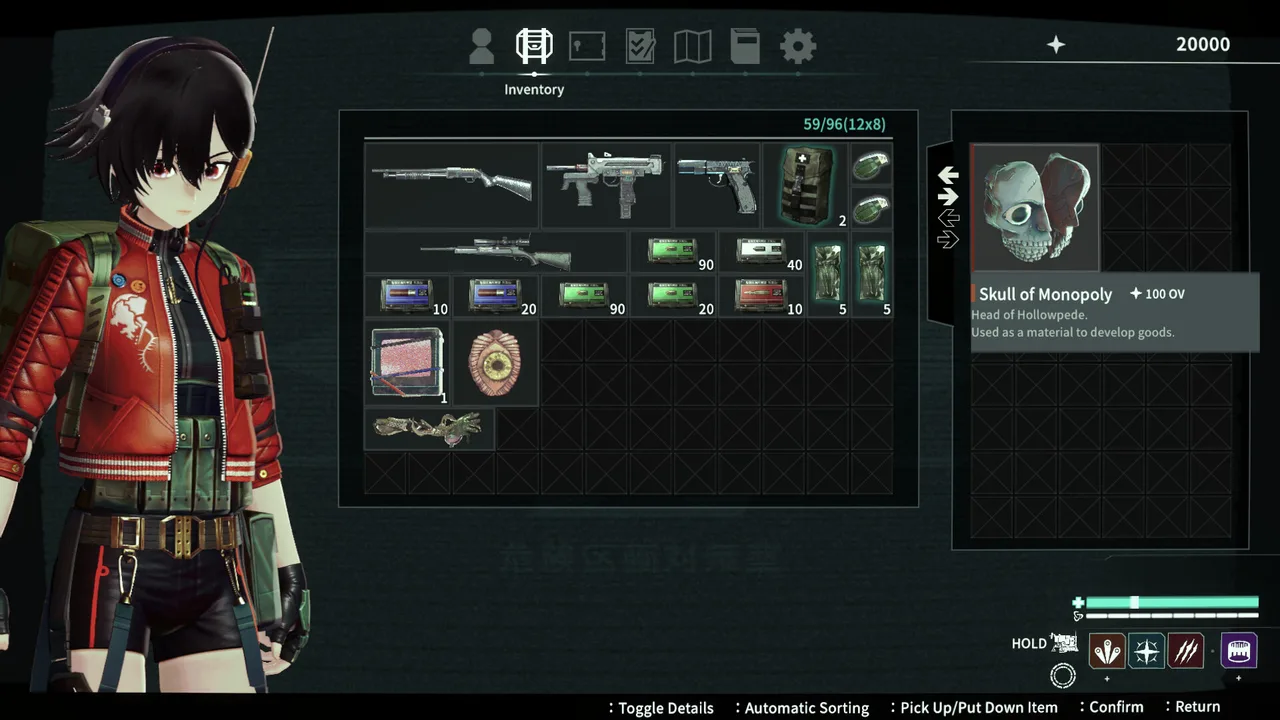
Your backpack is a fixed grid, and the grid is smaller than it looks. The container bag gives you 12 by 6 slots, the rescue backpack gives 12 by 7, and ammunition, consumables and loot all compete for the same squares. A second weapon occupies a large block of that grid for the entire dive.
Switching weapons also costs you a beat. There is a visible pause between stowing one gun and raising another, and enemies in this game punish that pause — which is the argument early players make for carrying a single weapon and learning it properly.
Pick the class that matches your aim and put everything into it. If you cannot hit heads under pressure, shotgun spread does the work; if you can, the revolver's 87 attack and six-round cylinder reward precision without a sniper's three-round penalty.
Attachments and shooting chips
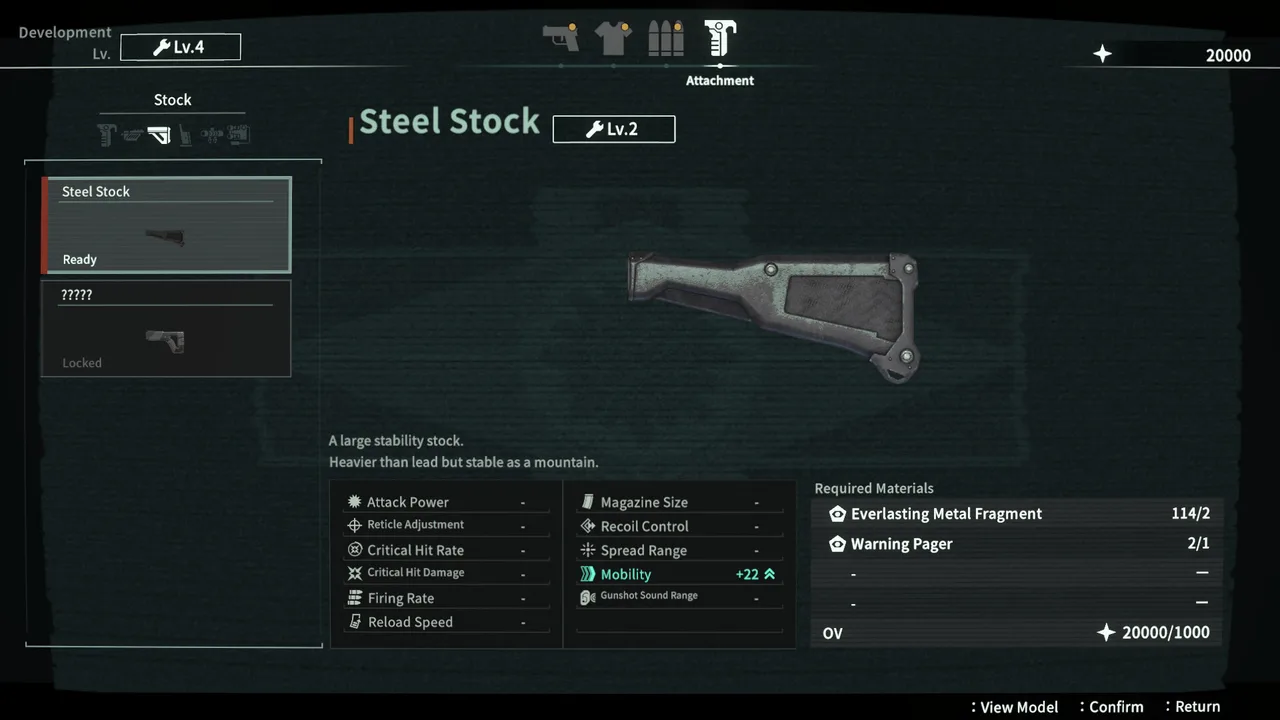
Guns accept attachments that change recoil, reload and effective range, and the Workshop develops them from the same material pool as the weapons themselves. Because attachments share the material budget, developing a chip for a gun you are about to replace is wasted OV.
Shooting chips are the other layer, and one is worth hunting: a chip that slows enemies on hit, buying the second of breathing room the no-dodge combat system otherwise denies you. Look for the effect rather than the name.
What to do before your next dive
Fill one gun's gauges before touching a second. Bank enough OV for the 2,800-cost craft tier before spending on attachments, because a new weapon tier beats any chip. And if you are still on the starter handgun at the hospital, go back for the shotgun lying in the room where you fight the first Anomaly — it is the single largest power spike available in the opening hours.